Six benefits SF-Archive offers that your current system probably doesn't

Hardware and system agnostic
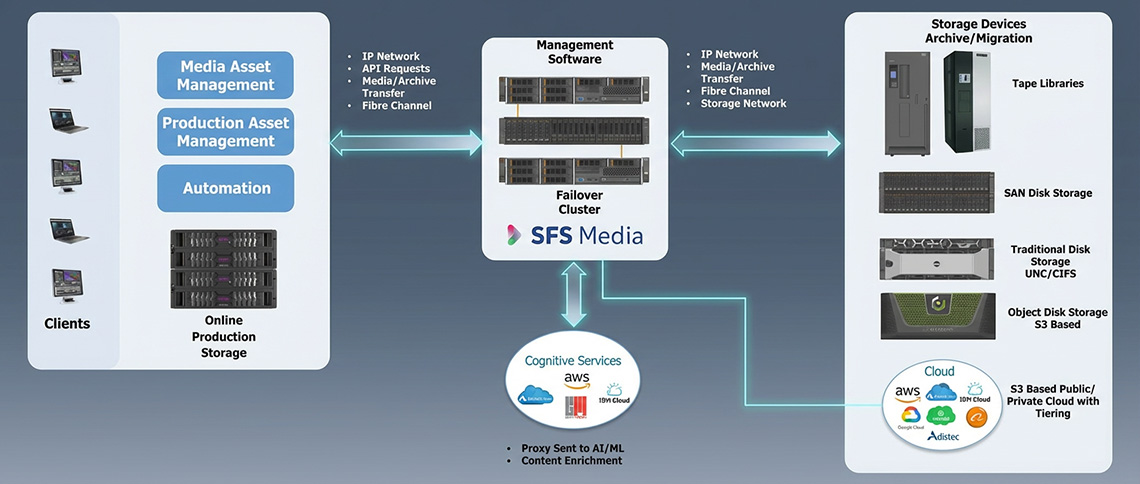
SF-Archive runs on your existing hardware and integrates with any MAM, PAM, or NRCS. No forced infrastructure changes, no vendor tie-in.

All legacy formats supported
LTFS, AXF, TAR, UDF, FlashNet, Kumulate, BlackPearl, Tedial, DIVA, Tivoli, SDNA and more. Your existing content is supported from day one, without a migration.

Automated storage tiering
Define your storage policies and let SF-Archive handle the rest. Content moves automatically to the right tier based on the rules you set.

Infinitely scalable
From a single server to a multi-node cluster, on-prem or cloud-based. Add capacity and hardware as your archive grows; your architecture adapts, your pricing doesn't.

Powerful monitoring and reporting
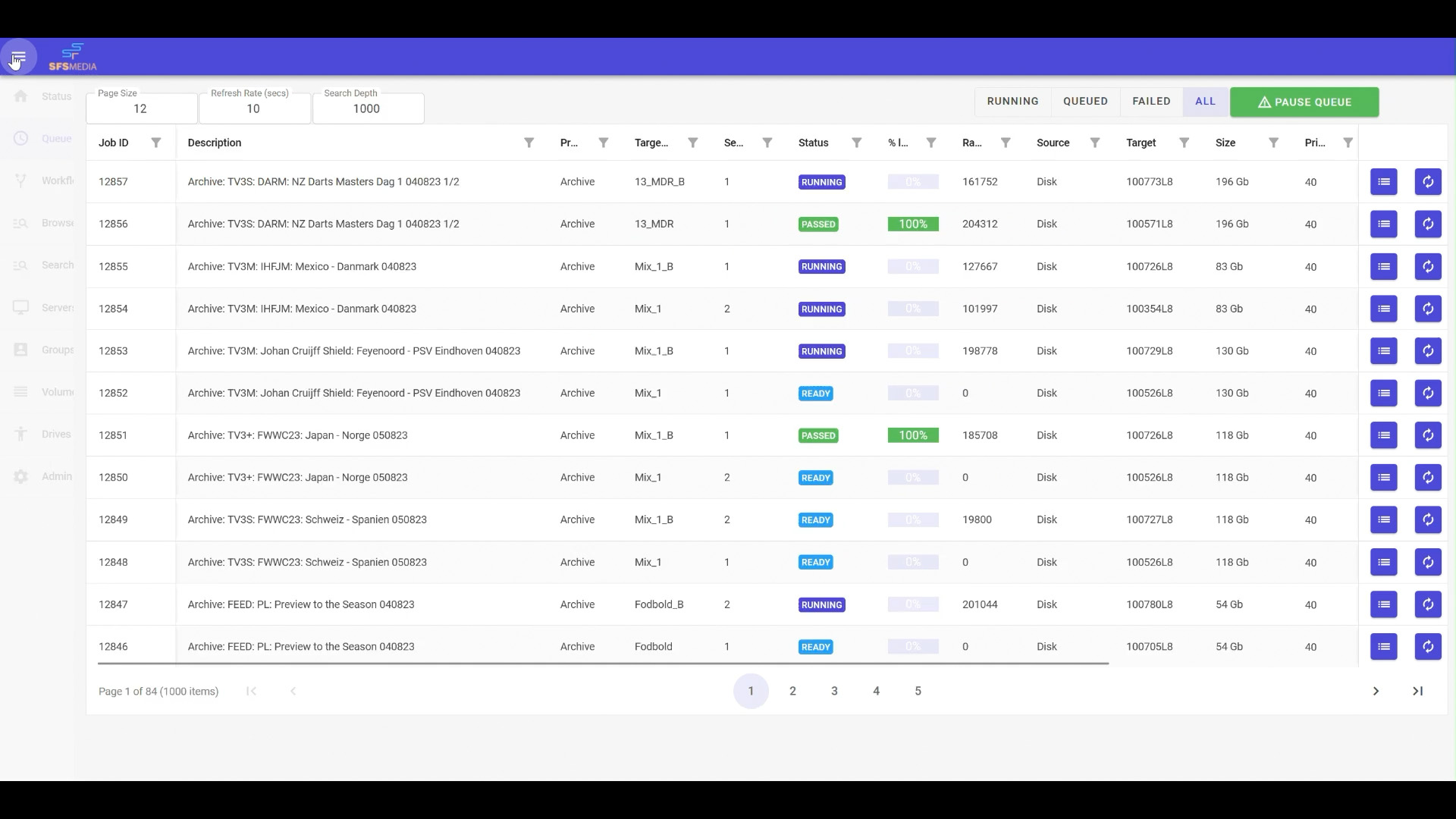
Track storage capacity, IO rates, and job queues in real time. Generate detailed reports and keep full oversight of your archive operations from one interface.

No capacity-based pricing
Your costs are tied to what the system does, not how much you store. Scale your archive without watching your bill scale with it.

One view across all your storage
SF-Archive presents your entire archive as a single unified repository. Tape libraries, disk, object storage, and cloud are all accessible through one interface. Users can search and request content without needing to know where it physically lives. Workflows run seamlessly, whether you're archiving, restoring, or tiering content across multiple storage targets.
From legacy to modern, in as little as one day
SF-Archive doesn't move your content, it converts your existing archive directly into the SF-Archive ecosystem. FlashNet, Kumulate, DIVA, BlackPearl, Tivoli, SDNA, Tedial, all supported. Your assets stay exactly where they are on storage. Your team keeps working. And from day one, everything behaves as if it were built natively in SF-Archive. When you're ready to move content to new storage targets, you do it on your own schedule, without disrupting operations.

S3 gateway: write once, route anywhere
SF-Archive can act as a native S3 object store or cloud bucket. Any S3-compatible system in your ecosystem can write directly to a pre-configured bucket, and SF-Archive automatically routes that data to your defined storage targets: tape, disk, cloud, or any combination. There's no limit to the number of copies or geographic locations you can configure.
Flexible integrations, low-code workflows
SF-Archive connects to all major MAM, PAM, and NRCS systems via REST or XML API. Direct integrations include Avid, Grass Valley, Dalet, Ross, and VizONE. An easy-to-configure orchestration layer lets operators build and manage their own workflows without custom development, automating file movement, transcoding, metadata enrichment, and more.


On-the-fly transcode and partial file restore
SF-Archive includes an integrated transcoder that normalizes or converts media as it moves through your workflow, delivering the right format to the right destination without additional tooling. Native partial file restore means you can retrieve a specific segment of a file from tape without restoring the entire asset, reducing wait times significantly for clip-level access.
Sample configuration