
Why broadcasters choose SF-Archive
Six benefits SF-Archive offers that your current system probably doesn't

Hardware and system agnostic
SF-Archive runs on your existing hardware and works with any MAM, PAM, NRCS or S3-compatible application. No forced infrastructure changes, no vendor tie-in.

All legacy formats supported
LTFS, AXF, TAR, UDF, FlashNet, Kumulate, BlackPearl, Tedial, DIVA, Tivoli, SDNA and more. Your existing content is supported from day one, without a migration.

Automated storage tiering
Define your storage policies and let SF-Archive handle the rest. Content moves automatically to the right tier based on the rules you set.

Infinitely scalable
From a single server to a multi-node cluster, on-prem or cloud-based. Add capacity and hardware as your archive grows; your architecture adapts, your pricing doesn't.

Powerful monitoring and reporting
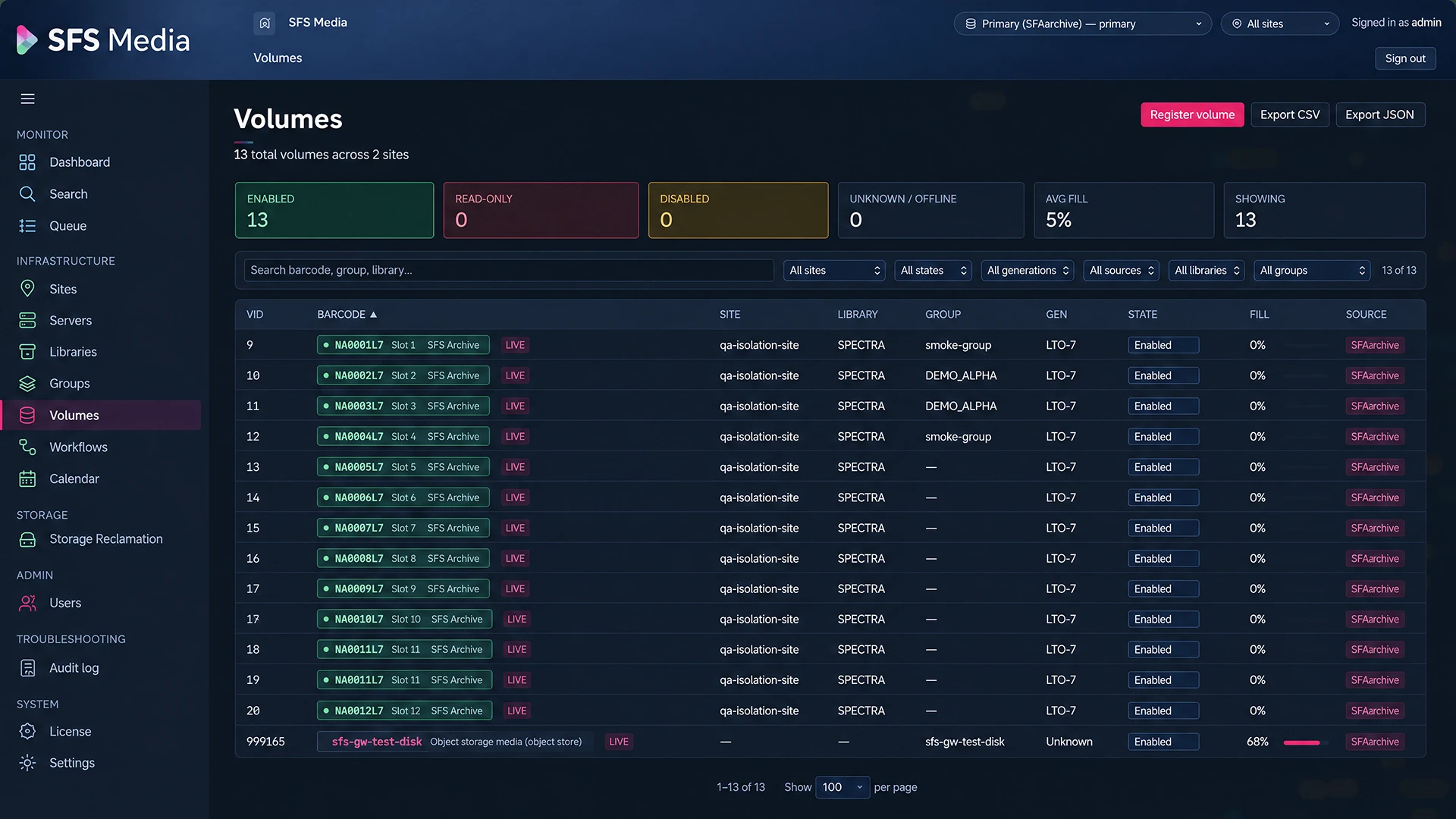
See every library, drive and storage tier live, with capacity, IO rates and job queues. Restart devices and jobs where possible, and generate detailed reports.

No capacity-based pricing
Your costs are tied to what the system does, not how much you store. Scale your archive without watching your bill scale with it.
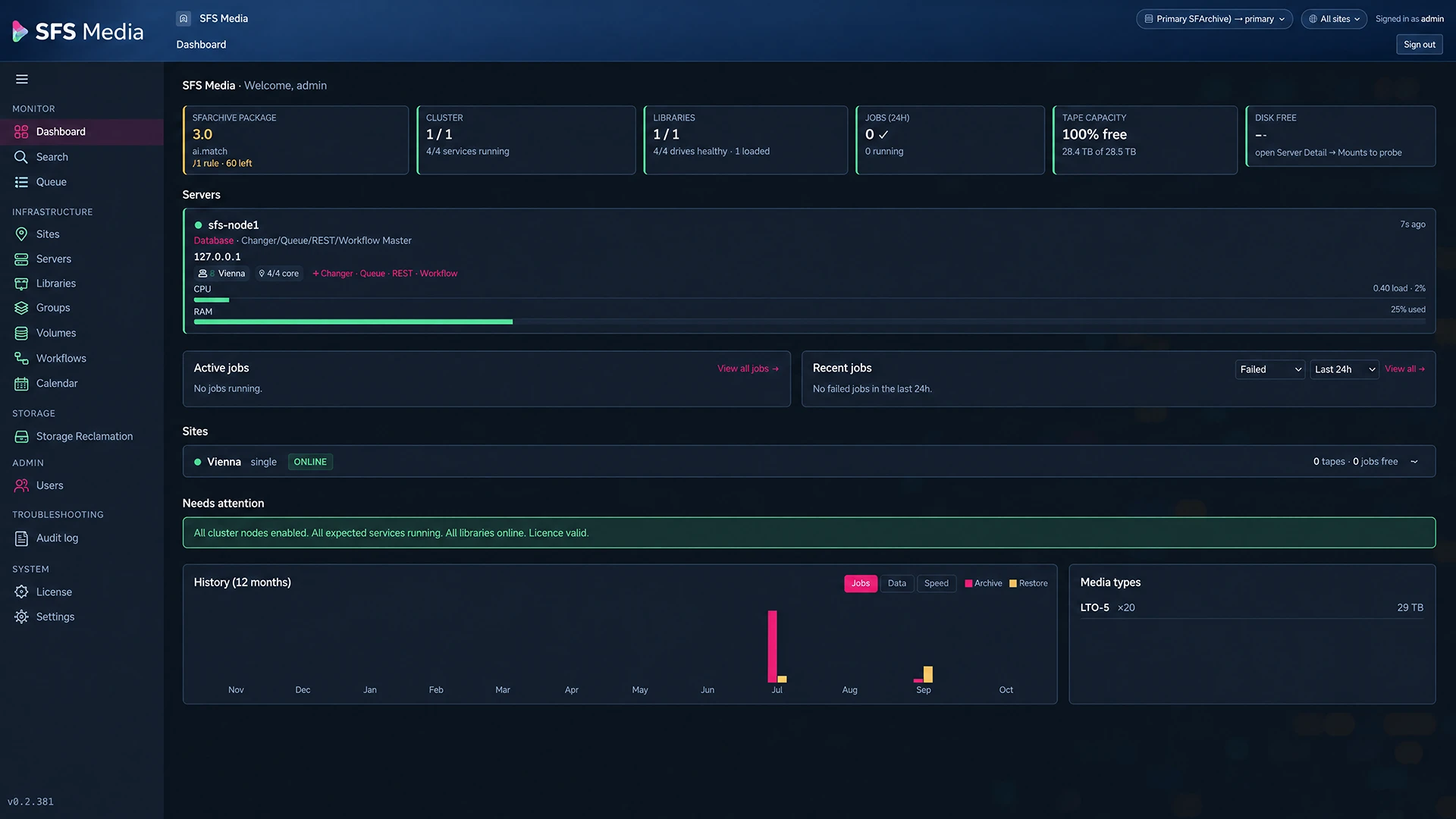
One view across all your storage
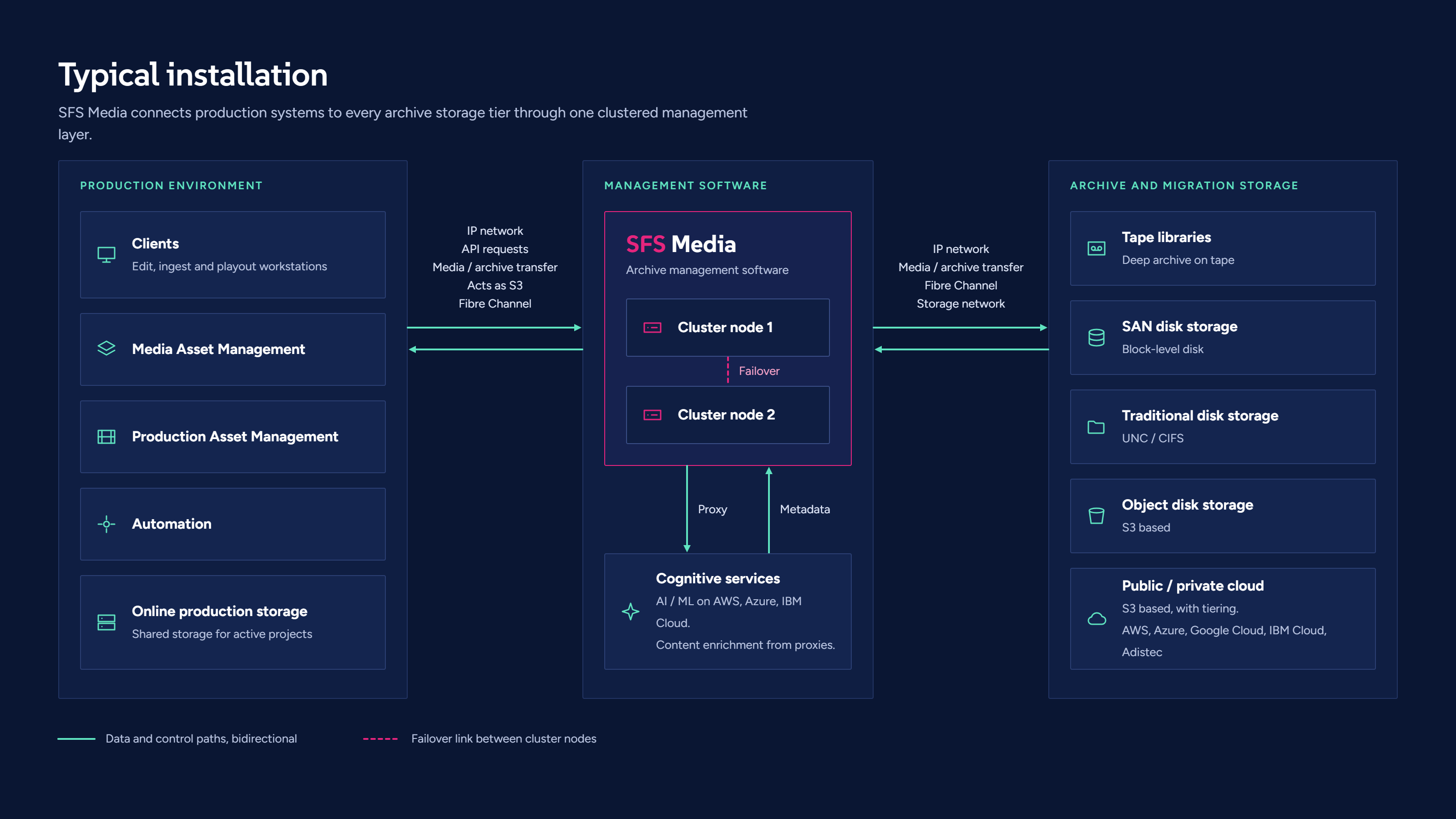
SF-Archive presents your entire archive as a single unified repository. Tape libraries, disk, object storage, and cloud are all accessible through one interface. Users can search and request content without needing to know where it physically lives. Workflows run seamlessly, whether you're archiving, restoring, or tiering content across multiple storage targets.
From legacy to modern, in as little as one day
SF-Archive doesn't move your content, it converts your existing archive directly into the SF-Archive ecosystem. FlashNet, Kumulate, DIVA, BlackPearl, Tivoli, SDNA, Tedial, all supported. Your assets stay exactly where they are on storage. Your team keeps working. And from day one, everything behaves as if it were built natively in SF-Archive. When you're ready to move content to new storage targets, you do it on your own schedule, without disrupting operations.
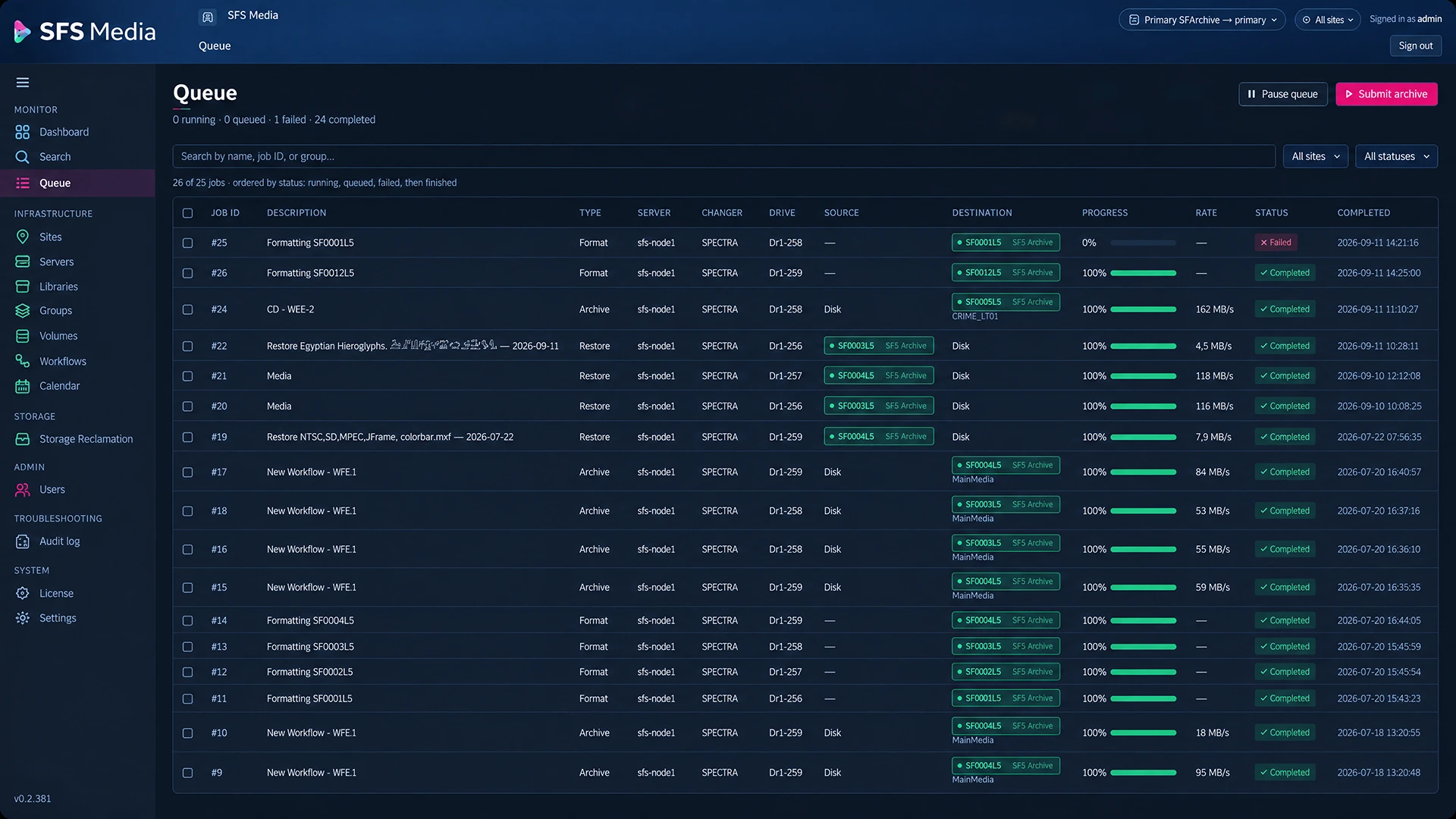
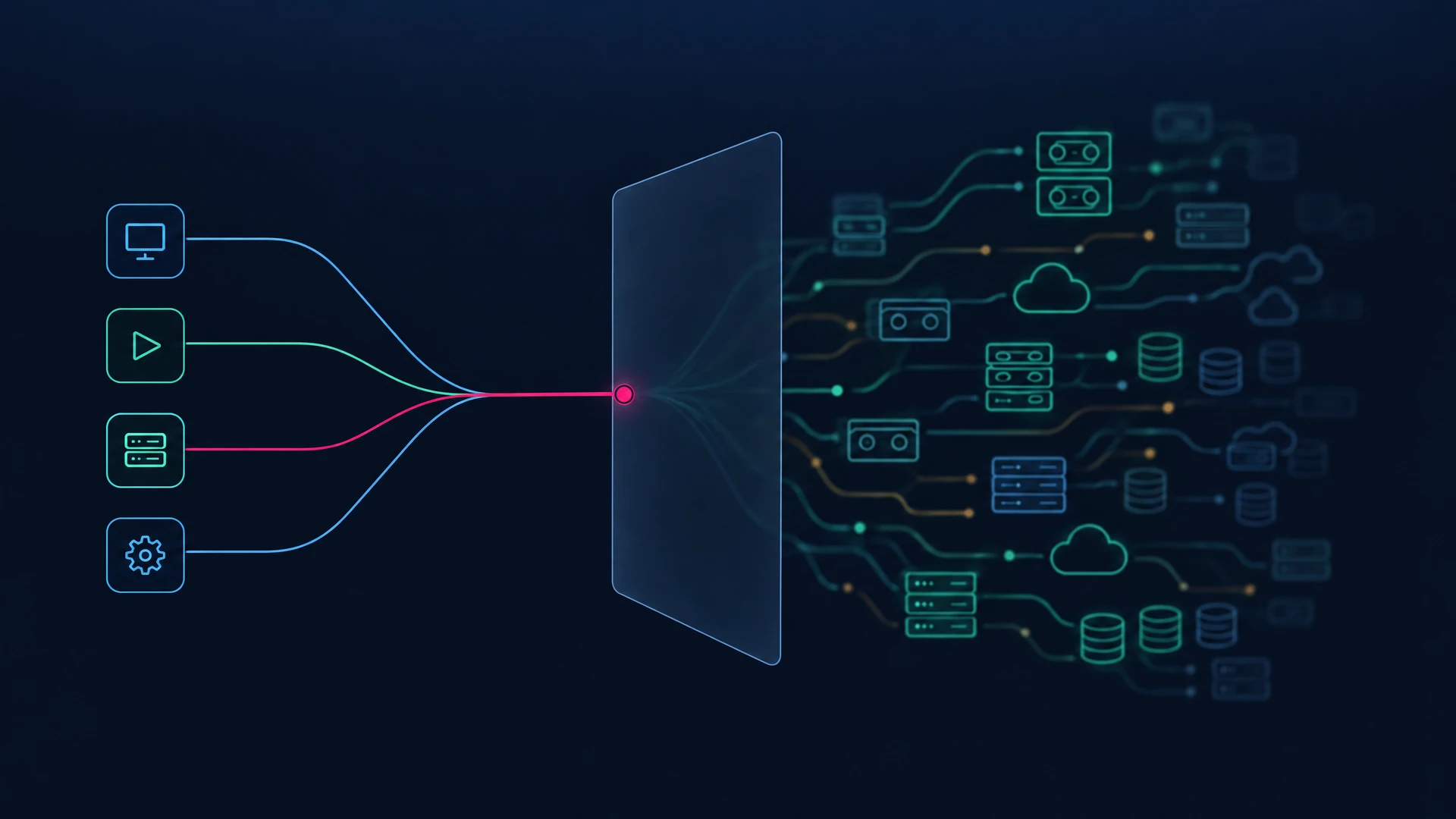
S3 gateway: write once, route anywhere
SF-Archive presents itself as a native S3 endpoint. Any MAM, PAM, automation system or in-house tool that speaks S3 can write to and read from a pre-configured bucket directly, with no custom integration work. SF-Archive then routes that content to tape, disk, object storage, cloud or any combination, following the tiering rules you define. There’s no limit to the number of copies or geographic locations.
That makes your choice of archive media an operational and financial decision, not an integration project. You can change, add or replace storage without touching the applications that depend on it.
Flexible integrations, low-code workflows
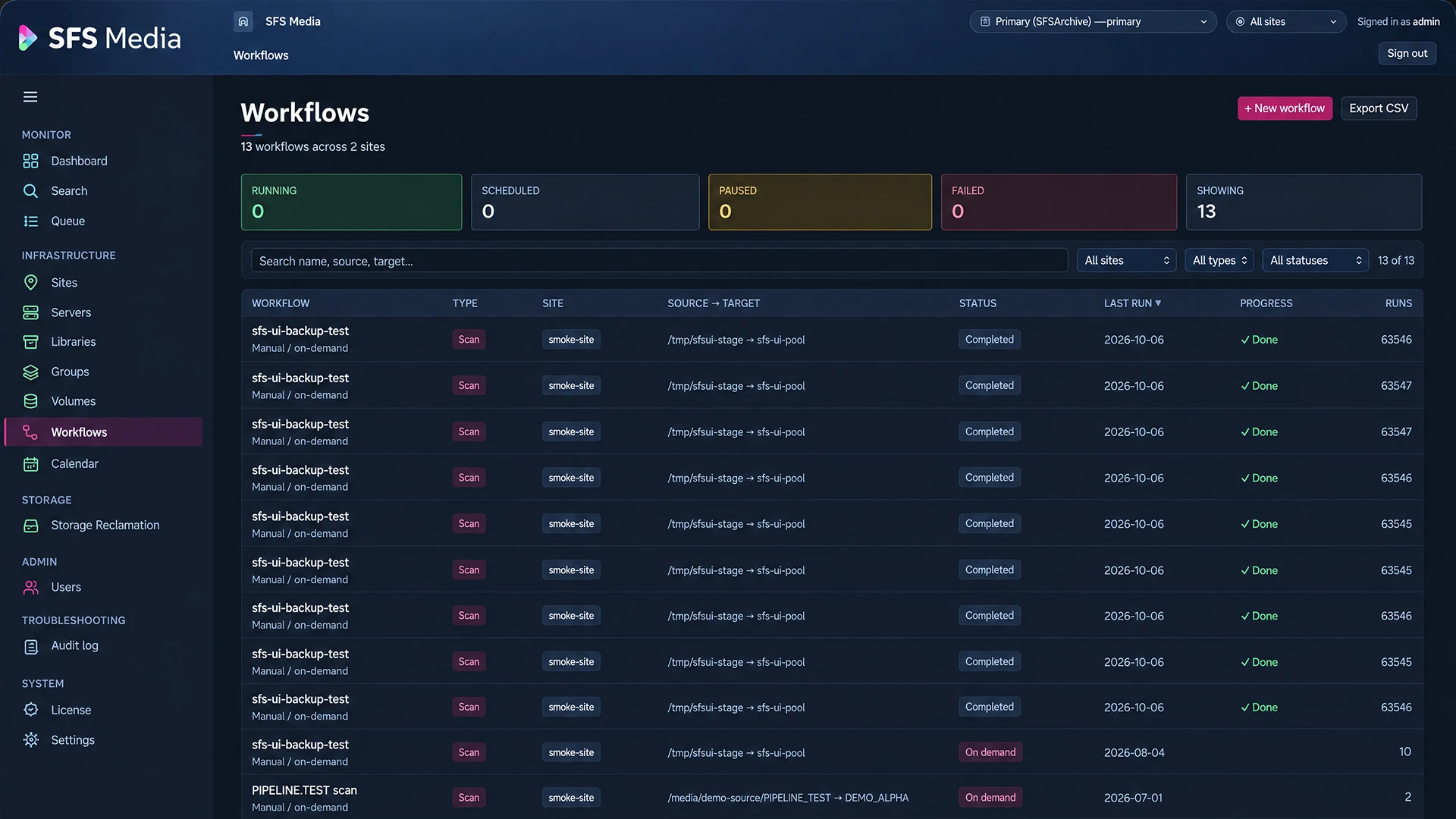
SF-Archive connects to all major MAM, PAM, and NRCS systems via REST or XML API. Direct integrations include Avid, Grass Valley, Dalet, Ross, and VizONE. An easy-to-configure orchestration layer lets operators build and manage their own workflows without custom development, automating file movement, transcoding, metadata enrichment, and more.
On-the-fly transcode and partial file restore
SF-Archive includes an integrated transcoder that normalizes or converts media as it moves through your workflow, delivering the right format to the right destination without additional tooling. Native partial file restore means you can retrieve a specific segment of a file from tape without restoring the entire asset, reducing wait times significantly for clip-level access.
Sample configuration
SF-Archive version 3 is here
A redesigned interface, live status of every storage device, and an S3 endpoint any application can write to. Read the full announcement.